
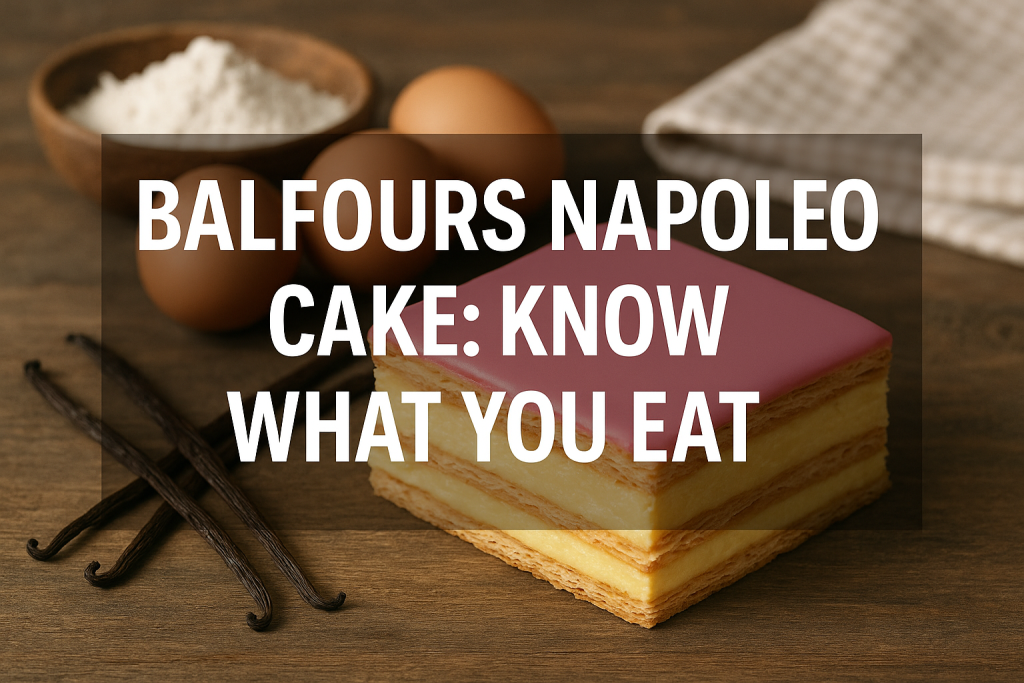
Picture this: It’s 1995, and I’m standing in a Balfours bakery in Adelaide with my grandmother, mesmerized by the rows of pink-frosted pastries gleaming under the display lights. “That’s a Napoleon cake, love,” she told me, reaching for one of those iconic treats. Fast forward to 2025, and I’m still drawn to that distinctive pink icing, but now I’m asking different questions—what exactly am I eating? If you’ve ever wondered about the Balfours Napoleon cake, from its ingredients to its nutritional impact, you’re in the right place. Let’s dive deep into this South Australian icon and discover what really goes into every bite. 🍰
Key Takeaways
- Balfours Napoleon cake is a South Australian bakery icon featuring layers of puff pastry, vanilla custard, and distinctive pink icing
- The cake contains approximately 300-350 calories per serving with high sugar and fat content from refined ingredients and preservatives
- Key ingredients include wheat flour, sugar, vegetable oils, custard powder, and various additives for shelf stability
- While delicious as an occasional treat, the Napoleon cake is best enjoyed mindfully due to its processed ingredients and nutritional profile
- Understanding ingredient labels helps you make informed choices about when and how often to indulge in this classic pastry
What Exactly Is a Balfours Napoleon Cake?
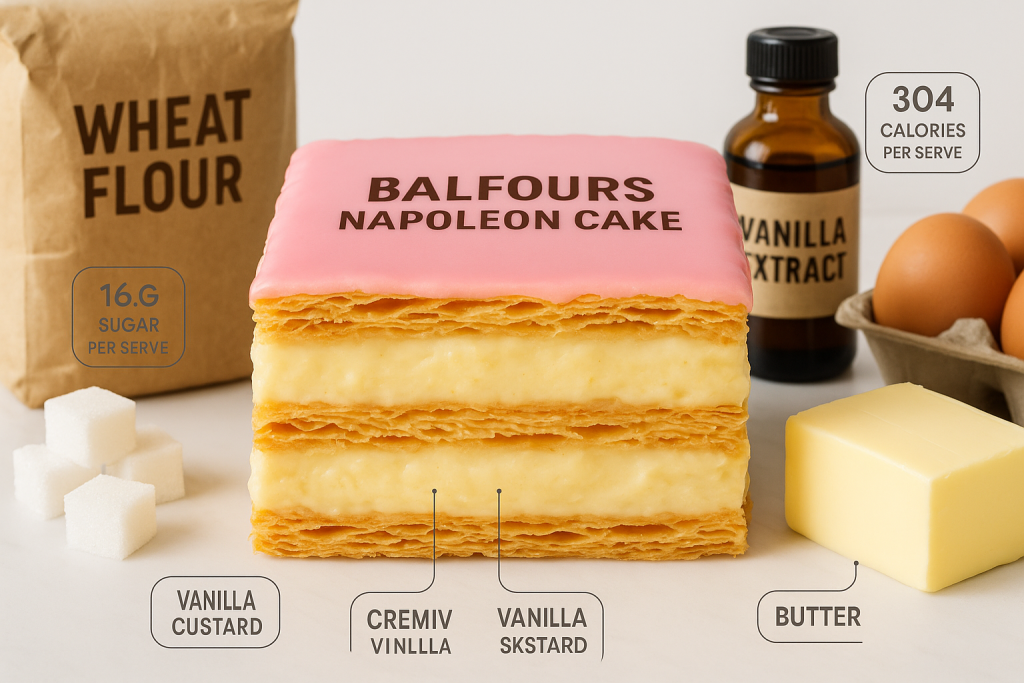
The Balfours Napoleon cake isn’t just any pastry—it’s a South Australian cultural institution. For those unfamiliar, Balfours is a beloved bakery chain that has been serving Australians since 1853[1]. Their Napoleon cake, sometimes called a “vanilla slice” in other parts of Australia, consists of layers of flaky puff pastry sandwiching a sweet vanilla custard filling, all topped with that signature bright pink icing.
The Anatomy of This Iconic Pastry
When you bite into a Napoleon cake, you’re experiencing:
- Top layer: Vibrant pink icing (sometimes white in traditional versions)
- Middle layers: Creamy vanilla-flavored custard
- Bottom layers: Crisp, golden puff pastry sheets
- Texture: A delightful contrast between crunchy and creamy
The name “Napoleon” is actually a bit of a mystery. Some food historians suggest it comes from the French “Napolitain” (meaning from Naples), while others believe it’s simply named after the famous French emperor[2]. Regardless of its origins, the Balfours version has become uniquely Australian.
Breaking Down the Balfours Napoleon Cake Ingredients
Here’s where things get interesting. As someone who believes in knowing exactly what I’m putting into my body, I’ve spent considerable time examining the ingredient list on Balfours Napoleon cake packaging. Let me break it down for you.
Primary Ingredients
| Ingredient Category | Specific Components | Purpose |
|---|---|---|
| Flour Base | Wheat flour, cornflour | Structure and texture |
| Sweeteners | Sugar, glucose syrup | Sweetness and moisture |
| Fats | Vegetable oil, margarine, butter | Flakiness and richness |
| Dairy | Milk powder, cream | Custard base |
| Thickeners | Modified starch, gelatine | Custard consistency |
| Preservatives | Sorbic acid, sodium benzoate | Shelf life extension |
The Not-So-Sweet Truth About Additives
When I first really looked at the ingredient list, I was surprised by the number of additives. The Balfours Napoleon cake contains several preservatives and artificial ingredients that help it maintain its shelf life and consistent appearance:
- Emulsifiers (E471, E472e): Help blend ingredients that don’t naturally mix
- Colors (including carmine for that pink icing): Provide visual appeal
- Acidity regulators: Maintain pH balance for preservation
- Flavoring agents: Enhance the vanilla taste
Important note: Some of these additives, particularly the food coloring, may cause reactions in sensitive individuals[3].
Nutritional Profile: What You’re Really Eating
Let’s talk numbers. I remember the day I actually calculated what one Napoleon cake meant for my daily intake—it was eye-opening! 👀
Nutritional Breakdown (Per Serving – Approximately 100g)
Calories: 300-350 kcal
Total Fat: 15-18g
- Saturated fat: 7-9g
Carbohydrates: 40-45g - Sugars: 20-25g
Protein: 4-5g
Sodium: 200-300mg
What This Means for Your Diet
To put this in perspective, one Balfours Napoleon cake represents:
- 15-17% of your daily caloric intake (based on a 2000 calorie diet)
- 35-45% of your recommended daily saturated fat
- 50-60% of your recommended daily added sugar intake[4]
“Understanding portion sizes and nutritional content empowers us to make conscious choices about our treats rather than mindlessly consuming them.” – Nutrition Australia
I’m not saying you should never enjoy a Napoleon cake—I certainly still do! But knowing these numbers helps me plan my day accordingly.
The Sugar Story: A Closer Look at Sweetness
The sugar content in the Balfours Napoleon cake deserves special attention. With approximately 20-25 grams of sugar per serving, you’re consuming about 5-6 teaspoons of sugar in a single pastry.
Where Does All That Sugar Come From?
- The pink icing: Primarily pure icing sugar
- The custard filling: Contains added sugar plus glucose syrup
- The pastry layers: Some sugar in the dough itself
Health Implications to Consider
Excessive sugar consumption has been linked to:
- Blood sugar spikes and crashes
- Increased risk of type 2 diabetes
- Weight gain when consumed regularly
- Dental health issues
- Inflammation in the body[5]
I learned this lesson the hard way after eating Napoleon cakes regularly during a particularly stressful work period. The energy crashes were real, and my dentist wasn’t thrilled either!
The Fat Factor: Understanding Lipid Content
The fat content in a Balfours Napoleon cake is substantial, and not all fats are created equal. The pastry contains a mix of saturated and unsaturated fats from various sources.
Types of Fats Present
Saturated fats (from butter, cream, and some vegetable oils):
- Contribute to the rich, indulgent texture
- Should be limited in a healthy diet
- Can raise LDL cholesterol when consumed in excess
Trans fats (potentially from margarine and processed oils):
- May be present in small amounts
- Considered the least healthy type of fat
- Being phased out of many products
The Puff Pastry Problem
The flaky texture we all love comes from layers of fat between thin sheets of dough. Traditional puff pastry uses butter, but commercial versions like Balfours often use vegetable shortening or margarine for cost and shelf stability reasons. This means you’re getting more processed fats rather than natural butter fats.
Preservatives and Shelf Life: The Trade-Off
One thing that makes the Balfours Napoleon cake convenient is its relatively long shelf life compared to homemade versions. But this convenience comes at a cost.
Common Preservatives Used
- Sorbic acid (E200): Prevents mold growth
- Sodium benzoate (E211): Antimicrobial preservative
- Calcium propionate: Inhibits bacterial growth
Are These Preservatives Safe?
According to food safety authorities, these preservatives are generally recognized as safe (GRAS) at the levels used in food products[6]. However, some individuals may experience:
- Allergic reactions
- Headaches
- Digestive discomfort
- Hyperactivity in sensitive children
I’ve noticed that when I eat fresher, less processed versions of similar pastries, I feel better afterward. Your mileage may vary, but it’s worth paying attention to how your body responds.
Comparing Balfours Napoleon Cake to Alternatives
How does the Balfours Napoleon cake stack up against other options? Let’s compare:
Commercial vs. Homemade
Balfours Napoleon Cake:
- ✅ Convenient and readily available
- ✅ Consistent taste and quality
- ❌ Contains preservatives and additives
- ❌ Higher in processed ingredients
- ❌ Less control over sugar and fat content
Homemade Napoleon/Vanilla Slice:
- ✅ Control over ingredient quality
- ✅ No preservatives needed
- ✅ Can reduce sugar content
- ❌ Time-consuming to make
- ❌ Shorter shelf life
- ❌ Requires baking skills
Versus Other Balfours Products
Compared to other Balfours offerings, the Napoleon cake sits in the middle range for calories but is higher in sugar than many of their savory options like meat pies or pasties.
Making Informed Choices: When and How to Enjoy
I’m a firm believer in the 80/20 rule—eat nutritiously 80% of the time, and enjoy treats like Balfours Napoleon cake the other 20%. Here’s how to make it work:
Smart Consumption Strategies
1. Portion Control 🍽️
- Consider sharing one with a friend
- Cut it in half and save the rest for another day
- Pair it with protein to slow sugar absorption
2. Timing Matters
- Enjoy as an occasional weekend treat, not a daily snack
- Eat after a balanced meal rather than on an empty stomach
- Avoid late-night consumption when your body is winding down
3. Balance Your Day
- If you know you’re having a Napoleon cake, eat lighter, nutrient-dense meals otherwise
- Increase your vegetable intake that day
- Stay well-hydrated
4. Physical Activity
- A brisk 45-minute walk can help offset the caloric impact
- Don’t use exercise as “punishment” for eating—just stay active overall
Reading Labels Like a Pro
When buying any Balfours Napoleon cake or similar product, check for:
- Ingredient order: Items are listed by quantity, so if sugar is in the top three, it’s a major component
- Serving size: Make sure you know what constitutes one serving
- Allergen warnings: Important if you have sensitivities
- Use-by dates: Fresher is generally better, even with preservatives
The Allergen Awareness Factor
The Balfours Napoleon cake contains several common allergens that you need to be aware of:
Major Allergens Present
- Gluten (from wheat flour)
- Dairy (milk, cream, butter)
- Eggs (in the custard and pastry)
Cross-Contamination Concerns
Balfours products are manufactured in facilities that also process:
- Tree nuts
- Soy
- Sesame seeds
If you have severe allergies, this cross-contamination risk is important to consider[7].
The Environmental and Ethical Angle
Beyond personal health, it’s worth considering the broader impact of products like the Balfours Napoleon cake.
Packaging Considerations
- Single-use plastic packaging
- Not easily recyclable in many areas
- Contributes to waste stream
Ingredient Sourcing
- Palm oil (if present) has environmental concerns
- Mass-produced eggs may come from caged hens
- Sugar production has its own environmental footprint
I try to balance my occasional indulgence with more sustainable choices in other areas of my diet. It’s about the overall pattern, not perfection.
Healthier Alternatives and Modifications
If you love the concept of a Napoleon cake but want a healthier version, consider these options:
DIY Modifications
Reduce sugar by:
- Using less icing or skipping it entirely
- Making custard with natural sweeteners like dates
- Using vanilla bean for flavor instead of relying on sugar
Improve fat quality by:
- Using real butter instead of margarine
- Making your own puff pastry with quality ingredients
- Adding Greek yogurt to the custard for protein
Boost nutrition by:
- Adding a layer of fresh berries
- Using whole grain pastry flour (though this changes texture)
- Incorporating protein powder into the custard
Store-Bought Alternatives
Look for:
- Bakeries that use organic, local ingredients
- Products with shorter ingredient lists
- Options with natural coloring instead of artificial dyes
The Cultural Significance: More Than Just a Cake
For South Australians, the Balfours Napoleon cake represents more than just a sweet treat—it’s part of cultural identity. I’ve met people who’ve moved overseas and had friends ship them Balfours products because nothing else quite compares.
Nostalgia and Food
There’s something powerful about food memories. That pink icing triggers memories of:
- Childhood birthday parties
- School fetes and sports days
- Family gatherings
- Special treats from grandparents
This emotional connection is valid and important. Food isn’t just fuel—it’s also comfort, tradition, and joy.
Expert Opinions on Occasional Indulgences
Nutritionists and dietitians generally agree that occasional treats like the Balfours Napoleon cake can fit into a healthy lifestyle. The key word is “occasional.”
What the Experts Say
Dr. Rosemary Stanton, a respected Australian nutritionist, has noted that “no single food will make or break your health. It’s the overall pattern of eating that matters most”[8].
The Australian Dietary Guidelines acknowledge that discretionary foods (treats) can comprise a small portion of your diet—about 0-3 serves per day, depending on your energy needs[9].
Practical Tips for Mindful Enjoyment
When you do decide to enjoy a Balfours Napoleon cake, make it count:
The Mindful Eating Approach
- Eliminate distractions: Put away your phone, turn off the TV
- Engage your senses: Notice the colors, smell, texture
- Eat slowly: Take small bites and really taste each one
- Check in with yourself: Are you enjoying it? Feeling satisfied?
- Stop when satisfied: You don’t have to finish it all
I’ve found that when I eat mindfully, I actually enjoy treats more and feel satisfied with less.
Teaching Kids About Treats Like Napoleon Cake
If you have children, the Balfours Napoleon cake presents a teaching opportunity about balanced eating.
Healthy Messages to Share
✅ Do say: “This is a special treat we enjoy sometimes”
✅ Do say: “Let’s enjoy this together and really taste it”
✅ Do say: “What do you notice about how this makes your body feel?”
❌ Avoid: “This is bad food” (creates guilt and shame)
❌ Avoid: “You can’t have this” (makes it more desirable)
❌ Avoid: “Eat this as a reward for eating vegetables” (creates unhealthy food hierarchies)
The Bottom Line: Is Balfours Napoleon Cake “Bad” for You?
After all this analysis, you might be wondering: should I eat Balfours Napoleon cake or not?
Here’s my honest take: The Napoleon cake is a processed, high-sugar, high-fat treat that offers minimal nutritional value. It contains preservatives, artificial ingredients, and provides a significant caloric load without much protein, fiber, or micronutrients.
However, it’s also delicious, culturally significant, and can absolutely be part of a balanced lifestyle when enjoyed occasionally and mindfully.
The Real Question to Ask
Instead of “Is this bad for me?” ask:
- “How often am I eating foods like this?”
- “Am I eating this because I truly want it or out of habit?”
- “Does this fit into my overall health goals?”
- “Am I making room for plenty of whole, nutritious foods too?”
Conclusion: Making Peace with Treats
At the end of the day, knowing what’s in your Balfours Napoleon cake empowers you to make informed decisions. You’re now equipped with knowledge about its ingredients, nutritional profile, and potential health impacts.
My journey with this iconic Australian treat has evolved from childhood wonder to adult awareness. I still enjoy a Napoleon cake a few times a year, usually when I’m back in Adelaide visiting family. But now I do so with full knowledge of what I’m consuming, and I balance it with an overall nutritious diet.
Your Action Steps
- Read labels: Check ingredients on all packaged foods, not just treats
- Plan your indulgences: Decide when treats fit into your week
- Focus on overall patterns: One Napoleon cake won’t derail your health
- Listen to your body: Notice how different foods make you feel
- Enjoy without guilt: When you choose to have a treat, really enjoy it!
Remember, perfect eating doesn’t exist, and striving for it often backfires. Instead, aim for informed, balanced choices most of the time, with room for foods that bring you joy—even if they come with pink icing. 🎂
The Balfours Napoleon cake isn’t health food, but it doesn’t have to be. It’s a treat, and when we understand exactly what we’re eating, we can make choices that align with both our health goals and our happiness. That’s what “know what you eat” is really all about.
References
[1] Balfours Bakery History. (2023). Company Heritage and Timeline. Balfours Official Website.
[2] Davidson, A. (2014). The Oxford Companion to Food. Oxford University Press.
[3] Food Standards Australia New Zealand. (2024). Food Additives and Colorings Safety Assessment.
[4] World Health Organization. (2023). Guidelines on Sugar Intake for Adults and Children.
[5] American Heart Association. (2024). Added Sugars and Cardiovascular Disease Risk.
[6] Food Standards Australia New Zealand. (2024). Food Preservatives: Safety and Regulation.
[7] Australasian Society of Clinical Immunology and Allergy. (2024). Food Allergen Guidelines.
[8] Stanton, R. (2023). The Complete Guide to Nutrition in Australia. Allen & Unwin.
[9] National Health and Medical Research Council. (2023). Australian Dietary Guidelines.