
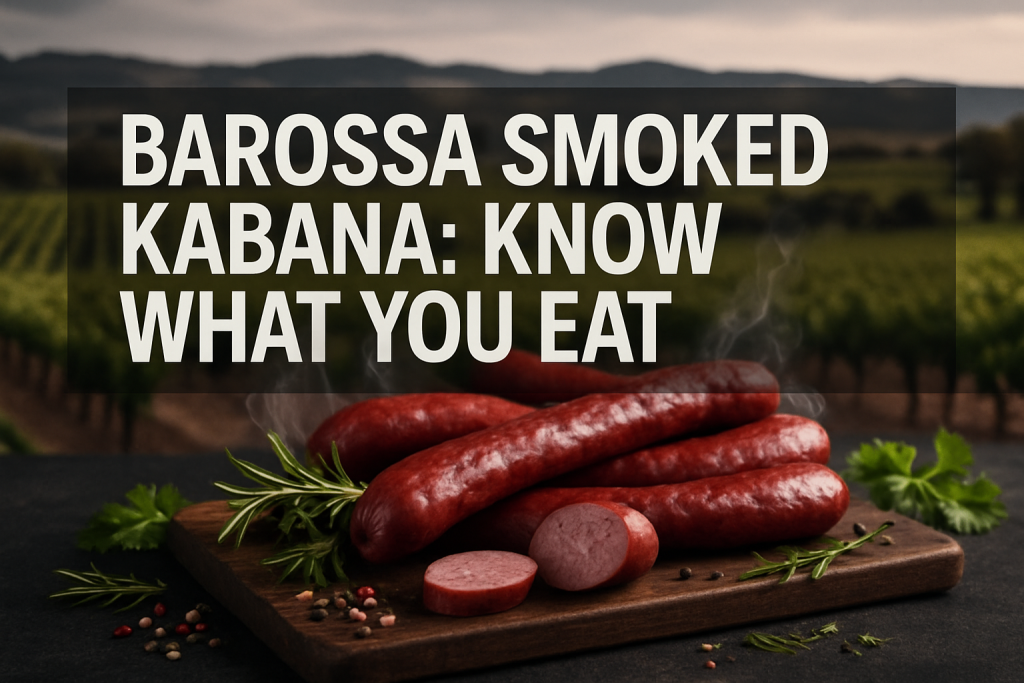
I’ll never forget the first time I encountered Barossa smoked kabana at a family barbecue in Adelaide. The smoky aroma wafting through the air, the satisfying snap as I bit into the casing, and that distinctively rich, slightly spicy flavour—it was love at first bite. But years later, as I became more conscious about what I was putting into my body, I started wondering: what’s actually inside this beloved Australian delicacy? If you’ve ever stood in the deli section, eyeing that familiar smoked sausage and wondering whether it fits into your dietary goals, you’re not alone. Today, we’re diving deep into barossa smoked kabana to help you truly know what you eat.
Key Takeaways
- Barossa smoked kabana is a traditional Australian-style smoked sausage with approximately 25-30g of fat per 100g and significant sodium content (800-1000mg per 100g)
- Not suitable for vegetarians, vegans, or pregnant women due to processed meat content and nitrite preservatives
- Generally gluten-free but always check labels as recipes can vary between manufacturers
- Best consumed in moderation as an occasional treat rather than a daily protein source
- Sugar content is relatively low (1-2g per 100g) but sodium and saturated fat levels warrant attention
What Exactly Is Barossa Smoked Kabana?
Let me take you on a quick journey through Australian food history. Barossa smoked kabana has its roots in the European sausage-making traditions brought to South Australia by German settlers in the 1800s. The Barossa Valley, renowned for its wine production, also became a hub for exceptional smallgoods manufacturing.
Kabana (sometimes spelled cabanossi or kabanos) is a semi-dried, smoked sausage traditionally made from pork, though modern versions may include beef or a combination of meats. The “Barossa” designation typically refers to products made in or inspired by the traditional methods of the Barossa Valley region.
The Traditional Making Process
The creation of authentic Barossa smoked kabana involves several key steps:
- Meat selection and grinding – Premium cuts are selected and ground to the right consistency
- Seasoning – A proprietary blend of spices, salt, and curing agents
- Stuffing – The mixture is packed into natural or synthetic casings
- Smoking – Cold or hot smoking over hardwood for that distinctive flavour
- Drying – Partial drying to achieve the characteristic firm texture
This process creates that unmistakable smoky, slightly tangy flavour profile that Australians have come to love. Similar to other Australian smallgoods like bratwurst, the quality of ingredients and smoking technique makes all the difference.
Nutritional Breakdown: What’s Really Inside Barossa Smoked Kabana?
Now let’s get to the heart of what you really want to know—what’s actually in this tasty treat? I’ve analysed typical nutritional profiles from major Australian manufacturers, and here’s what you need to know.
Macronutrient Profile
| Nutrient | Per 100g | Per 50g Serving |
|---|---|---|
| Energy | 1,200-1,400 kJ | 600-700 kJ |
| Protein | 18-22g | 9-11g |
| Total Fat | 25-30g | 12.5-15g |
| Saturated Fat | 10-13g | 5-6.5g |
| Carbohydrates | 2-4g | 1-2g |
| Sugars | 1-2g | 0.5-1g |
| Sodium | 800-1,000mg | 400-500mg |
The Good News 🎉
- High protein content: With around 20g of protein per 100g, kabana does provide substantial protein
- Low sugar: Unlike many processed foods, the sugar content is minimal (1-2g per 100g)
- Low carbohydrate: Suitable for low-carb eating patterns
- Rich in B vitamins: Particularly B12, niacin, and thiamine
- Contains iron and zinc: Important minerals for various bodily functions
The Not-So-Good News ⚠️
- High in saturated fat: At 10-13g per 100g, it’s significant
- Very high sodium: One 50g serving provides about 20% of your daily sodium limit
- Processed meat classification: Falls under WHO Group 1 carcinogens when consumed regularly [1]
- Contains nitrites: Used as preservatives, which have health concerns with excessive consumption
- Calorie-dense: Easy to overconsume without realizing
Sugar Content Analysis: The Sweet Truth
One question I frequently hear is: “How much sugar is in Barossa smoked kabana?” The good news here is actually quite positive compared to many processed foods.
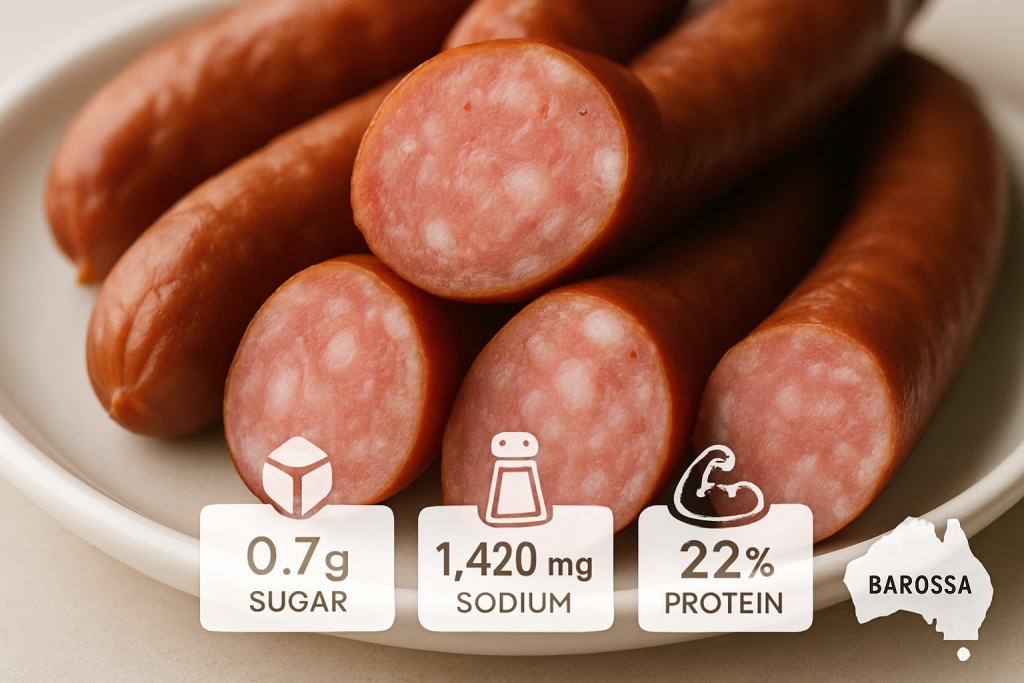
Most Barossa smoked kabana contains only 1-2 grams of sugar per 100g, which translates to approximately 0.5-1g per typical 50g serving. This is considerably lower than many other processed meat products.
Where Does the Sugar Come From?
The minimal sugar content in kabana typically comes from:
- Dextrose or glucose – Added in small amounts during curing to feed beneficial bacteria
- Natural sugars – Trace amounts from spices and seasonings
- Lactose – If milk powder is used as a binder (though uncommon)
For context, this sugar content is negligible compared to something like flavoured rice products or even some condiments. If you’re monitoring sugar intake for diabetes management or general health, the sugar in kabana shouldn’t be a primary concern—the sodium and fat content warrant more attention.
Is Barossa Smoked Kabana Suitable for Pregnant Women?
This is where I need to deliver some disappointing news for expecting mothers. Barossa smoked kabana is generally not recommended during pregnancy for several important reasons.
Why Pregnant Women Should Avoid Kabana
1. Listeria Risk 🦠
- Semi-dried and smoked sausages can harbour Listeria monocytogenes
- This bacteria can survive the smoking and partial drying process
- Listeriosis poses serious risks to developing babies including miscarriage, stillbirth, or severe illness in newborns [2]
2. Nitrite Preservatives
- Sodium nitrite is commonly used in cured meats
- While generally recognized as safe in small amounts, pregnant women are advised to minimize exposure
- Can potentially affect oxygen transport in the blood
3. High Sodium Content
- Pregnancy already increases fluid retention
- Excessive sodium can exacerbate swelling and contribute to gestational hypertension
Safer Alternatives for Pregnant Women
If you’re craving that smoky, savoury flavour during pregnancy, consider:
- Freshly cooked sausages heated until steaming hot (165°F/74°C internal temperature)
- Vegetarian alternatives with smoky seasonings
- Thoroughly heated deli meats (though still best minimized)
Always consult with your healthcare provider about dietary choices during pregnancy. The information on our website is designed to help you make informed decisions, but individual circumstances vary.
Vegetarian and Vegan Suitability: A Clear Answer
Let me be completely straightforward here: traditional Barossa smoked kabana is absolutely not suitable for vegetarians or vegans.
Why Kabana Isn’t Vegetarian
The primary ingredients are:
- Pork (most common)
- Beef (in some varieties)
- Animal casings (natural intestines) or synthetic casings
- Animal-derived ingredients in seasonings
There’s simply no way around it—kabana is fundamentally a meat product.
Plant-Based Alternatives
However, the good news is that the plant-based movement has exploded in recent years! While I haven’t seen a specific “Barossa-style” vegan kabana on Australian shelves yet, there are excellent plant-based sausage alternatives that capture similar flavour profiles:
- Vegan chorizo-style sausages (smoky and spicy)
- Plant-based bratwurst
- Smoked tempeh or tofu sausages
- Seitan-based deli slices
The key is looking for products with liquid smoke, paprika, and similar spices that recreate that distinctive smoky, slightly spicy flavour we associate with kabana.
Gluten Content: Good News for Coeliacs
Here’s some genuinely positive news: most Barossa smoked kabana is naturally gluten-free! 🎊
Why Kabana Is Usually Gluten-Free
The traditional ingredients in kabana don’t include gluten:
- Meat (naturally gluten-free)
- Salt and spices (gluten-free)
- Curing agents (gluten-free)
- Natural casings (gluten-free)
Important Caveats ⚠️
However, you must always check the label because:
- Fillers and binders – Some manufacturers add breadcrumbs or wheat-based fillers
- Cross-contamination – Processing facilities may handle gluten-containing products
- Seasonings – Some spice blends may contain wheat derivatives
- Recipe variations – Not all kabana is created equal
Look for products with “gluten-free” certification or carefully read ingredient lists. When in doubt, contact the manufacturer directly. This is similar to checking other processed foods like deli meats where gluten can hide in unexpected places.
Understanding the Ingredients: What’s Really in There?
Let’s decode a typical Barossa smoked kabana ingredient list. I’ve always believed that knowing what you eat means understanding every component, not just the nutritional panel.
Common Ingredients Breakdown
Primary Ingredients:
- Pork and/or Beef (70-85%) – The meat base
- Water – For moisture and processing
- Salt – Flavouring and preservation
- Dextrose – Small amounts of sugar for curing
Preservatives and Curing Agents:
- Sodium Nitrite (250) – Prevents bacterial growth, maintains colour
- Sodium Nitrate (251) – Converts to nitrite over time
- Sodium Ascorbate (301) – Antioxidant, helps preserve colour
Flavourings:
- Spices – Pepper, garlic, paprika, and proprietary blends
- Natural smoke flavour – May be added in addition to actual smoking
Other Additives:
- Sodium Phosphates – Helps retain moisture
- Antioxidants – Prevent rancidity
Should You Be Concerned About Nitrites?
This is probably the most controversial ingredient in kabana. Sodium nitrite serves important functions:
✅ Benefits:
- Prevents botulism (a deadly form of food poisoning)
- Maintains appealing pink/red colour
- Contributes to characteristic cured meat flavour
❌ Concerns:
- Can form nitrosamines (potential carcinogens) when exposed to high heat
- Associated with increased colorectal cancer risk with excessive processed meat consumption [3]
The key word here is moderation. Occasional consumption is unlikely to pose significant risk, but daily consumption of processed meats is not recommended by health authorities.
Health Implications: The Balanced Perspective
I’m not here to tell you that Barossa smoked kabana is a health food—it’s not. But I’m also not going to demonize something that brings joy to many Australians when enjoyed responsibly. Let’s look at this objectively.
Potential Health Concerns
1. Cardiovascular Health ❤️
- High saturated fat content can raise LDL cholesterol
- Excessive sodium contributes to hypertension
- Processed meat consumption linked to increased heart disease risk [4]
2. Cancer Risk
- WHO classifies processed meats as Group 1 carcinogens
- Risk increases with regular, high consumption
- Each 50g daily serving increases colorectal cancer risk by approximately 18% [1]
3. Weight Management ⚖️
- Calorie-dense at 1,200-1,400 kJ per 100g
- Easy to overconsume
- High fat content contributes to energy density
4. Kidney Function
- High sodium content stresses kidneys
- Particularly concerning for those with existing kidney disease
When Kabana Can Fit Into a Healthy Diet
Despite these concerns, I believe there’s room for foods like kabana in a balanced approach to eating:
- Occasional enjoyment – Once or twice a month rather than daily
- Portion control – Stick to 30-50g servings
- Balanced meals – Pair with vegetables, whole grains, and healthy fats
- Active lifestyle – Physical activity helps offset some dietary indulgences
- Overall dietary pattern – What you eat most of the time matters more than occasional treats
Think of kabana like you might think of other indulgent foods—delicious, culturally significant, but best enjoyed mindfully rather than as a dietary staple.
Comparing Barossa Smoked Kabana to Other Processed Meats
To give you better context, let’s see how kabana stacks up against other popular Australian processed meats.
Nutritional Comparison Table
| Product (per 100g) | Energy (kJ) | Protein (g) | Fat (g) | Sodium (mg) |
|---|---|---|---|---|
| Barossa Smoked Kabana | 1,200-1,400 | 18-22 | 25-30 | 800-1,000 |
| Salami | 1,800-2,000 | 20-25 | 35-45 | 1,500-2,000 |
| Ham (leg) | 450-550 | 20-22 | 2-5 | 900-1,200 |
| Fritz/Devon | 900-1,100 | 12-15 | 18-22 | 800-1,000 |
| Chorizo | 1,400-1,600 | 22-25 | 30-35 | 1,200-1,500 |
Key Observations
- Kabana sits in the middle range for fat content
- Protein content is good compared to fritz or devon
- Sodium levels are moderate compared to salami or ham
- Energy density is significant but not the highest
If you’re choosing between processed meats, kabana isn’t the worst option, but it’s certainly not the healthiest. Products like lean roast pork offer better nutritional profiles if you’re looking for deli meat options.
Storage, Shelf Life, and Food Safety
Proper storage of Barossa smoked kabana is crucial for both food safety and maintaining quality. Here’s what you need to know.
Unopened Kabana
- Refrigerate immediately at 4°C or below
- Shelf life: Typically 4-8 weeks (check use-by date)
- Never leave at room temperature for extended periods
After Opening
- Use within 3-5 days for best quality
- Wrap tightly in plastic wrap or store in airtight container
- Keep refrigerated at all times
- Check for signs of spoilage: off smell, slimy texture, mould
Can You Freeze Kabana?
Yes! Freezing extends shelf life significantly:
- Wrap portions individually in plastic wrap, then place in freezer bag
- Label with date
- Use within 2-3 months for best quality
- Thaw in refrigerator overnight before use
Food Safety Tips 🔒
- Always check use-by dates before purchasing
- Smell test – If it smells off, throw it out
- Visual inspection – Discard if you see mould or discolouration
- Temperature control – Don’t let it sit out during parties for more than 2 hours
- Cross-contamination – Use separate cutting boards for raw and ready-to-eat foods
How to Enjoy Barossa Smoked Kabana: Serving Suggestions
While we’ve focused heavily on nutritional analysis, let’s not forget that food is also about enjoyment! Here are some ways to incorporate kabana into meals while being mindful of portion sizes.
Classic Serving Ideas
1. Cheese and Charcuterie Board 🧀
- Slice thinly (30-40g per person)
- Pair with cheese, crackers, olives, and fresh fruit
- The fruit and vegetables add nutrients and fibre
2. Pasta Addition
- Dice and add to tomato-based pasta sauces
- Use sparingly (50g for a family-sized pasta dish)
- Adds smoky depth without overwhelming
3. Pizza Topping
- Thin slices on homemade pizza
- Combine with vegetables to balance the meal
- Use as a flavour accent rather than the main protein
4. Sandwich Component
- A few slices in a sandwich with plenty of salad
- Pair with whole grain bread
- Add avocado for healthy fats
5. Antipasto Salad
- Cubed kabana (30g) tossed through a large green salad
- Balances the richness with fresh vegetables
- Light vinaigrette dressing
Portion Control Strategies
One challenge with kabana is that it’s easy to eat too much. Here are my tips:
- Pre-portion – Slice what you need and put the rest away
- Visual cues – A serving should be about the size of your thumb
- Bulk up meals – Use kabana as a flavouring agent, not the main protein
- Mindful eating – Savour each bite rather than mindlessly snacking
Making Informed Choices: The “Know What You Eat” Philosophy
This brings us to the core philosophy behind our analysis at Zupra—empowering you to make informed decisions about what you eat.
The Three-Question Framework
When evaluating any food product, I recommend asking yourself:
1. What’s actually in it?
- Read the ingredient list
- Understand the nutritional profile
- Identify additives and preservatives
2. How does it fit my dietary needs?
- Consider your health goals
- Account for dietary restrictions
- Think about your overall eating pattern
3. What role does it play in my diet?
- Staple food or occasional treat?
- Nutritional contribution vs. pleasure
- Portion size and frequency
Applying This to Barossa Smoked Kabana
Let’s apply this framework:
What’s in it? Pork/beef, significant fat and sodium, preservatives, low sugar, good protein
Dietary fit? Not suitable for pregnant women, vegetarians, or vegans; generally okay for gluten-free diets; concerns for those managing heart health or weight
Dietary role? Best positioned as an occasional treat or flavour enhancer rather than a protein staple
This same analytical approach can be applied to any food product, from breakfast drinks to convenience foods.
The Verdict: Should You Eat Barossa Smoked Kabana?
After this deep dive into Barossa smoked kabana, you might be wondering: what’s the final verdict?
Here’s my honest take: Barossa smoked kabana is a delicious, culturally significant Australian food that can absolutely have a place in a balanced diet—but it should be treated as an occasional indulgence rather than a dietary staple.
When Kabana Makes Sense ✅
- You’re enjoying it occasionally (once or twice a month)
- You’re portion-conscious (30-50g servings)
- You have no specific health contraindications
- You’re balancing it with plenty of vegetables, fruits, and whole grains
- You’re physically active and maintain a healthy weight
- You genuinely enjoy it and it brings you pleasure
When to Reconsider ❌
- You have cardiovascular disease or high blood pressure
- You’re pregnant or breastfeeding
- You’re following a vegetarian or vegan diet
- You have kidney disease requiring sodium restriction
- You’re eating it daily or multiple times per week
- You’re struggling with weight management
The Middle Path
I’ve always believed that extreme dietary restrictions often backfire. If you love kabana and it’s part of your cultural or family traditions, completely eliminating it might not be necessary or sustainable. Instead:
- Reduce frequency – From weekly to monthly
- Reduce portions – From 100g to 30-50g
- Improve context – Pair with nutrient-dense foods
- Increase awareness – Truly savour it when you do eat it
Alternatives and Healthier Options
If you’re looking to reduce your kabana consumption but still want similar flavours and convenience, here are some alternatives worth considering.
Lower-Sodium Options
Some manufacturers now produce reduced-sodium versions of traditional smallgoods. While still processed meats, they can contain 25-30% less sodium.
Leaner Protein Choices
- Chicken breast – Slice and season with smoked paprika
- Turkey breast – Lower in fat than pork-based products
- Lean beef strips – Marinated and grilled
- Canned fish – Sardines or tuna for omega-3s
Plant-Based Alternatives
The plant-based market is expanding rapidly:
- Smoked tempeh – Fermented soy with great texture
- Seitan sausages – Wheat protein with smoky seasonings
- Mushroom-based products – Umami-rich and satisfying
- Jackfruit – Excellent texture for pulled “meat” styles
DIY Approach
Consider making your own seasoned, grilled proteins at home:
- Control sodium by using herbs and spices
- Choose quality meat from trusted sources
- Avoid preservatives entirely
- Customize flavours to your preference
Understanding Food Labels: Becoming a Savvy Consumer
One of the most valuable skills you can develop is the ability to critically read and understand food labels. Let me share some tips I’ve learned over years of analysing products.
The Ingredient List
Ingredients are listed in descending order by weight:
- First few ingredients make up the bulk of the product
- Long ingredient lists often indicate heavy processing
- Look for recognizable, whole food ingredients
The Nutrition Information Panel
Key things to check:
- Serving size – Is it realistic? Manufacturers sometimes use tiny servings to make numbers look better
- Per 100g column – Best for comparing products
- Sodium content – Aim for less than 400mg per 100g for “everyday” foods
- Saturated fat – Less than 3g per 100g is considered low
Health Claims
Be sceptical of front-of-pack claims:
- “Natural” has no legal definition
- “No added sugar” doesn’t mean low sugar
- “Lite” or “Light” might refer to colour or texture, not nutrition
- Look for Heart Foundation Tick or similar credible certifications
Red Flags 🚩
- Sodium above 1,000mg per 100g
- Saturated fat above 10g per 100g
- Long lists of numbers (additive codes)
- Vague terms like “meat” without specifying type
The Cultural Significance of Kabana in Australia
Before we wrap up, I want to acknowledge that food is about more than just nutrition. Barossa smoked kabana holds a special place in Australian food culture, particularly in South Australia.
Heritage and Tradition
The German settlers who arrived in the Barossa Valley in the 1840s brought with them centuries-old sausage-making traditions. These techniques were adapted to Australian conditions and tastes, creating unique products that are now distinctly Australian.
Community and Celebration
For many Australians, kabana is associated with:
- Family gatherings and barbecues
- Christmas and holiday celebrations
- Childhood memories of school lunches
- Regional pride in South Australian food heritage
Balancing Health and Heritage
I believe we can honour these cultural connections while also being informed about nutritional realities. You don’t have to choose between enjoying traditional foods and taking care of your health—it’s about finding the right balance.
Perhaps kabana becomes a special occasion food rather than an everyday staple. Maybe you savour smaller portions more mindfully. Or you might share the tradition with younger generations while also teaching them about balanced nutrition.
Food is deeply personal and cultural, and I respect that everyone’s relationship with food is different. My goal is simply to provide you with the information you need to make choices that align with your values and health goals.
Conclusion: Empowered Eating Starts with Knowledge
We’ve covered a lot of ground in this comprehensive analysis of Barossa smoked kabana. From nutritional breakdowns to suitability for special dietary groups, from health implications to cultural significance—you now have the information you need to make informed decisions.
The key takeaways:
- Barossa smoked kabana is high in protein but also high in fat and sodium, making it best suited for occasional consumption
- It’s not appropriate for pregnant women, vegetarians, or vegans, but is generally gluten-free
- Sugar content is low, which is positive, but other nutritional concerns remain
- Moderation and portion control are essential if you choose to include it in your diet
- Context matters—occasional enjoyment as part of an otherwise balanced diet is very different from daily consumption
Your Next Steps
Now that you’re armed with this knowledge, here’s what I recommend:
Step 1: Assess Your Current Consumption
- How often do you currently eat kabana?
- What portion sizes are you consuming?
- What role does it play in your overall diet?
Step 2: Make Conscious Decisions
- Decide on an appropriate frequency for your health goals
- Plan portion sizes in advance
- Consider alternatives for some occasions
Step 3: Optimize When You Do Indulge
- Choose quality products from reputable manufacturers
- Pair with nutrient-dense foods
- Practice mindful eating to maximize enjoyment
Step 4: Stay Informed
- Continue learning about the foods you eat
- Read labels critically
- Explore our other product analyses to expand your knowledge
Remember, the goal isn’t perfection—it’s progress. Every informed choice you make is a step toward better health and wellbeing. Whether you decide to continue enjoying Barossa smoked kabana occasionally or explore alternatives, you’re now making that decision from a place of knowledge rather than ignorance.
At Zupra, we’re committed to helping you know what you eat. Because when you understand what’s really in your food, you can make choices that support both your health goals and your quality of life.
Here’s to informed, balanced, and joyful eating! 🍽️
References
[1] World Health Organization. (2015). IARC Monographs evaluate consumption of red meat and processed meat. International Agency for Research on Cancer.
[2] Food Standards Australia New Zealand. (2022). Listeria and food safety during pregnancy. FSANZ Guidelines.
[3] Song, P., Wu, L., & Guan, W. (2015). Dietary nitrates, nitrites, and nitrosamines intake and the risk of gastric cancer: A meta-analysis. Nutrients, 7(12), 9872-9895.
[4] Micha, R., Wallace, S. K., & Mozaffarian, D. (2010). Red and processed meat consumption and risk of incident coronary heart disease, stroke, and diabetes mellitus. Circulation, 121(21), 2271-2283.