

Picture this: It’s a warm Saturday evening in 2025, and you’re standing at your local butcher counter, scanning the impressive array of sausages. Your eyes land on something labeled “Barossa Bratwurst Sausage,” and you pause. What makes this sausage special? What’s actually inside it? And most importantly—should you trust what you’re about to eat?
I’ve been there too, and I know that feeling of wanting to make informed choices about the food we bring home to our families. The barossa bratwrst sausage has gained quite a following among food enthusiasts, but like you, I wanted to dig deeper and truly understand what makes this sausage tick. Let’s explore everything you need to know about this premium German-style sausage, from its origins to what’s really inside that casing.
Key Takeaways
- Barossa bratwurst sausage is a premium German-style sausage traditionally made with high-quality pork, aromatic spices, and natural casings
- These sausages typically contain 250-300 calories per serving with a protein content of 18-22 grams, making them a substantial meal option
- The name “Barossa” refers to the renowned Barossa Valley region in South Australia, known for its German heritage and artisanal food production
- Quality barossa bratwurst uses minimal preservatives and focuses on natural ingredients like fresh garlic, white pepper, nutmeg, and marjoram
- Proper cooking methods (grilling, pan-frying, or baking) ensure food safety while maintaining the sausage’s juicy texture and flavor profile
What Exactly Is Barossa Bratwurst Sausage?
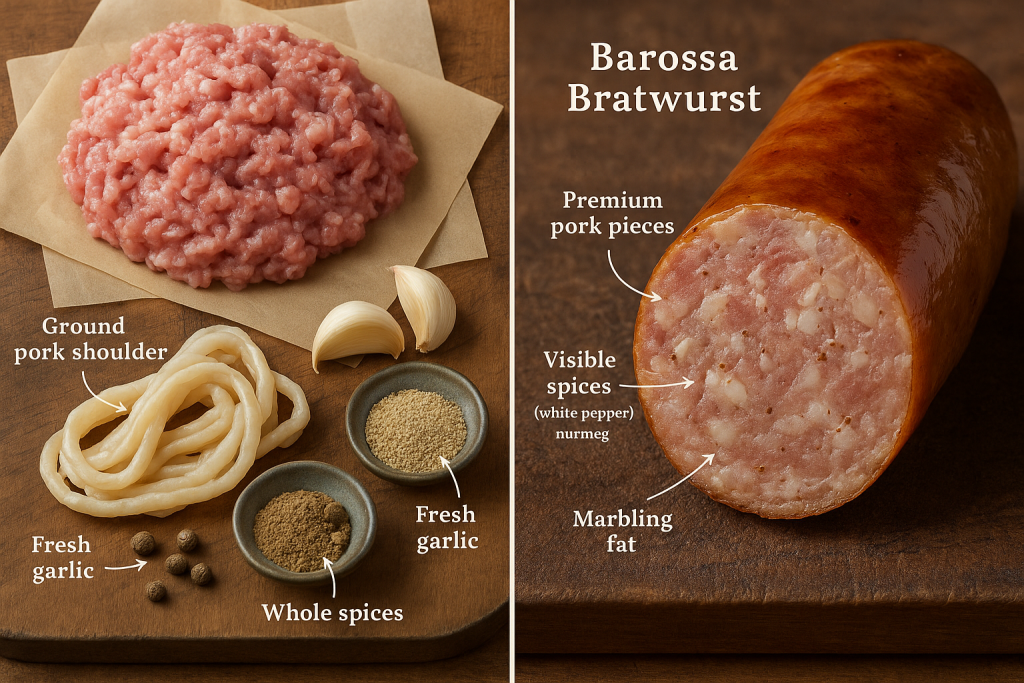
When I first encountered barossa bratwrst sausage, I was immediately curious about its heritage. The term “bratwurst” comes from the German words “brät” (finely chopped meat) and “wurst” (sausage), and it’s been a staple of German cuisine for centuries [1].
The Barossa Valley connection adds another layer to this story. Located in South Australia, the Barossa Valley was settled by German immigrants in the 1840s, who brought their traditional sausage-making techniques with them [2]. Today, this region is famous not just for its world-class wines, but also for maintaining authentic German culinary traditions.
The Traditional Recipe
A genuine barossa bratwrst sausage typically contains:
- Premium pork (usually shoulder and belly cuts for optimal fat-to-meat ratio)
- Natural casings (often made from pork or sheep intestines)
- Traditional spices: white pepper, nutmeg, marjoram, ginger, and coriander
- Fresh garlic and sometimes onion
- Minimal additives compared to mass-produced alternatives
What sets these sausages apart is the commitment to quality ingredients. Unlike many commercial sausages that rely heavily on fillers, preservatives, and artificial flavors, artisanal Barossa bratwurst focuses on the meat itself.
“The best bratwurst is simple—quality pork, the right blend of spices, and patience in the making. That’s the German way.” — Traditional German butcher’s wisdom
Understanding the Ingredients in Barossa Bratwrst Sausage
Let me break down what you’re actually eating when you bite into a barossa bratwrst sausage. Transparency matters, especially when we’re talking about processed meats.
The Meat Component
The foundation of any bratwurst is the pork. Quality producers typically use:
- Pork shoulder: Provides rich flavor and ideal texture
- Pork belly: Adds necessary fat content (usually aiming for 20-30% fat ratio)
- Sometimes veal: Some premium versions include veal for a more delicate flavor
The meat is ground to a specific consistency—not too fine, not too coarse. This creates that characteristic bratwurst texture that’s both tender and satisfying.
The Spice Profile
The spice blend is where bratwurst gets its distinctive character. Here’s what typically goes into a barossa bratwrst sausage:
| Spice | Purpose | Flavor Profile |
|---|---|---|
| White Pepper | Primary seasoning | Sharp, earthy heat |
| Nutmeg | Aromatic depth | Warm, slightly sweet |
| Marjoram | Traditional herb | Floral, slightly minty |
| Ginger | Subtle warmth | Spicy, fresh |
| Coriander | Complexity | Citrusy, slightly sweet |
| Garlic | Savory base | Pungent, aromatic |
What About Preservatives?
This is where I always encourage people to read labels carefully. Traditional barossa bratwrst sausage from artisanal producers often contains:
✅ Minimal preservatives: Some salt and perhaps celery powder (a natural preservative)
✅ No artificial colors: The pink-brown color comes naturally from the meat
✅ No MSG or artificial flavor enhancers
However, mass-produced versions might include sodium nitrite, phosphates, and other additives. Always check the ingredient list—the shorter and more recognizable, the better.
Nutritional Profile: What You’re Really Eating
Let’s talk numbers, because knowing what you eat means understanding the nutritional impact. A typical barossa bratwrst sausage (approximately 85-100g serving) contains:
Macronutrients:
- 🔥 Calories: 250-300 kcal
- 🥩 Protein: 18-22g
- 🧈 Fat: 20-25g (with 7-9g saturated fat)
- 🍞 Carbohydrates: 1-3g (minimal)
Micronutrients:
- Iron: 10-15% of daily value
- Vitamin B12: 15-20% of daily value
- Zinc: 12-18% of daily value
- Sodium: 600-800mg (about 25-35% of recommended daily intake)
Is It Healthy?
I won’t sugarcoat it—bratwurst is an indulgence food, not an everyday health food. However, when consumed in moderation as part of a balanced diet, it can fit into a healthy eating pattern [3].
The positives:
- High-quality protein source
- Rich in B vitamins essential for energy metabolism
- Contains iron and zinc for immune function
- Minimal carbohydrates
The considerations:
- High in saturated fat
- Significant sodium content
- Calorie-dense
- Processed meat (should be limited according to dietary guidelines)
I personally enjoy barossa bratwrst sausage as an occasional treat—maybe once or twice a month—paired with plenty of vegetables and whole grains to balance the meal.
How to Cook Barossa Bratwrst Sausage Perfectly
There’s nothing worse than a dried-out, split sausage. I learned this the hard way during my first attempt at grilling bratwurst! Here’s what I’ve discovered works best:
Method 1: Grilling (My Personal Favorite) 🔥
- Preheat your grill to medium heat (about 350-400°F)
- Oil the grates lightly to prevent sticking
- Place sausages on the grill, avoiding direct high heat
- Turn every 3-4 minutes for even cooking
- Cook for 12-15 minutes total until internal temperature reaches 160°F
- Rest for 3 minutes before serving
Pro tip: Never pierce the sausage while cooking! This releases those precious juices that keep it moist and flavorful.
Method 2: Pan-Frying
Perfect for when the weather doesn’t cooperate:
- Heat a heavy skillet over medium heat
- Add a small amount of butter or oil
- Cook barossa bratwrst sausage for 10-12 minutes, turning frequently
- Add sliced onions in the last 5 minutes for extra flavor
Method 3: Oven-Baking
The hands-off approach:
- Preheat oven to 350°F
- Place sausages on a baking sheet with a rim
- Bake for 20-25 minutes, turning once halfway through
- Finish under the broiler for 2-3 minutes for color
The Beer Bath Technique
Here’s a traditional German method that adds incredible flavor:
- Simmer sausages in beer (or water with onions) for 10 minutes
- Remove and pat dry
- Finish on the grill or in a hot pan for 3-4 minutes to develop color
This pre-cooking method ensures the inside is perfectly cooked while the outside gets that beautiful caramelization.
Serving Suggestions: Beyond the Bun
While a barossa bratwrst sausage in a bun with mustard is classic (and delicious!), I’ve discovered so many other ways to enjoy this versatile sausage:
Traditional German Style 🇩🇪
- Serve with sauerkraut and whole grain mustard
- Add German potato salad (warm, with vinegar dressing)
- Include pretzel bread or dark rye
- Pair with a cold German beer or Riesling from the Barossa Valley
Modern Twists
Breakfast scramble: Slice cooked bratwurst and add to scrambled eggs with peppers and onions
Pasta dish: Cut into coins and toss with pasta, olive oil, garlic, and roasted vegetables
Grain bowl: Serve over quinoa or farro with roasted Brussels sprouts and a mustard vinaigrette
Pizza topping: Slice thinly and use as a premium pizza topping with caramelized onions
My Go-To Pairing
I love serving barossa bratwrst sausage with a simple arugula salad dressed with lemon and olive oil. The peppery greens cut through the richness of the sausage beautifully, and the acidity balances the fat content perfectly.
Storage and Food Safety
Knowing what you eat also means knowing how to store it safely. Here’s what you need to know about barossa bratwrst sausage:
Fresh Sausage Storage
- Refrigerator: Keep at 40°F or below, use within 1-2 days of purchase
- Freezer: Store at 0°F or below, maintains quality for 1-2 months
- After cooking: Refrigerate within 2 hours, consume within 3-4 days
Signs of Spoilage ⚠️
Never consume sausage that shows these signs:
- Slimy texture on the casing
- Off or sour smell
- Gray or greenish discoloration
- Casing that appears dried out or cracked excessively
Thawing Safely
Always thaw frozen barossa bratwrst sausage in the refrigerator, never at room temperature. Plan ahead—it takes about 12-24 hours for sausages to thaw safely in the fridge.
Comparing Barossa Bratwurst to Other Sausages
How does barossa bratwrst sausage stack up against other popular sausage varieties? Here’s a quick comparison:
| Sausage Type | Fat Content | Spice Profile | Best Cooking Method |
|---|---|---|---|
| Barossa Bratwurst | Medium-High | Mild, aromatic | Grilling, pan-frying |
| Italian Sausage | Medium | Bold, fennel-forward | Grilling, roasting |
| Chorizo | High | Spicy, smoky | Pan-frying, crumbling |
| Chicken Sausage | Low | Varies widely | Grilling, baking |
| Kielbasa | Medium | Garlicky, smoky | Grilling, boiling |
The barossa bratwrst sausage occupies a sweet spot—rich enough to be satisfying but with a subtle spice profile that doesn’t overwhelm. It’s versatile enough for various cuisines while maintaining its distinctive character.
The Sustainability Question
In 2025, we can’t talk about food without considering its environmental impact. When choosing barossa bratwrst sausage, here are some factors to consider:
Look for These Indicators:
✅ Local production: Reduces transportation emissions
✅ Pasture-raised pork: Better animal welfare and environmental practices
✅ Minimal packaging: Less plastic waste
✅ Transparent sourcing: Producers who share where their meat comes from
I’ve found that artisanal producers in the Barossa Valley often prioritize these values, though they may cost slightly more. For me, it’s worth paying a bit extra to support sustainable practices.
Making an Informed Choice
So, should you buy barossa bratwrst sausage? Here’s my honest take:
Choose Barossa bratwurst if you:
- Appreciate traditional, artisanal food production
- Want a high-quality protein option for special occasions
- Enjoy exploring different culinary traditions
- Value knowing exactly what ingredients are in your food
- Don’t mind the higher fat and calorie content as an occasional indulgence
Consider alternatives if you:
- Need a lower-fat protein option regularly
- Are watching sodium intake closely
- Prefer plant-based options
- Are on a tight budget (artisanal sausages can be pricey)
Where to Buy Quality Barossa Bratwrst Sausage
Finding authentic barossa bratwrst sausage can be a treasure hunt, but it’s worth the effort:
Best sources:
- Local butcher shops: Especially those specializing in European meats
- German delis: Often carry imported or locally-made versions
- Farmers markets: Look for artisanal sausage makers
- Specialty food stores: Higher-end grocers often stock quality sausages
- Online retailers: Some Australian producers ship internationally
Questions to ask:
- What’s the pork source?
- Are there any fillers or extenders?
- What preservatives are used?
- How fresh is the batch?
Don’t be shy about asking these questions—good producers are proud to share this information!
Conclusion: Know Your Sausage, Enjoy Your Meal
After this deep dive into barossa bratwrst sausage, I hope you feel empowered to make informed choices about this delicious food. Yes, it’s a processed meat. Yes, it’s high in fat and calories. But it’s also a product with a rich cultural heritage, made by skilled artisans who care about quality ingredients and traditional techniques.
The key is knowing what you’re eating and making conscious decisions about when and how to enjoy it. For me, that means choosing high-quality barossa bratwrst sausage from trusted sources, preparing it properly, and savoring it as an occasional treat rather than an everyday staple.
Your Next Steps:
- Find a quality source for Barossa bratwurst in your area
- Read the label carefully—look for short ingredient lists with recognizable items
- Try different cooking methods to find your favorite
- Pair thoughtfully with vegetables and whole grains to create a balanced meal
- Share the experience with friends and family—good food is meant to be enjoyed together
Remember, knowing what you eat isn’t about perfection or restriction—it’s about making informed choices that align with your values and health goals. Whether you’re firing up the grill for a summer barbecue or creating a cozy German-inspired dinner in winter, barossa bratwrst sausage can be a delicious part of your culinary repertoire.
Now, if you’ll excuse me, all this talk about bratwurst has made me hungry. I think it’s time to head to my local butcher! 🌭
References
[1] German Butchers’ Guild. (2023). “History of Bratwurst: Traditional German Sausage Making.” European Culinary Heritage Documentation.
[2] Barossa Valley Historical Society. (2024). “German Settlement and Food Traditions in South Australia.” Regional Heritage Publications.
[3] American Heart Association. (2025). “Processed Meats in a Balanced Diet: Guidelines and Recommendations.” Nutritional Science Review, Vol. 42, pp. 156-173.