
I’ll never forget the morning my niece asked me, “Auntie, why does my cereal snap and pop?” as she poured milk over her Rice Bubbles. That simple question led me down a fascinating rabbit hole about one of Australia’s most iconic breakfast cereals. But as someone who’s passionate about helping Australians understand what they’re eating, I realized there’s a more important question many of us should be asking: how much sugar in Rice Bubbles, really?
If you’ve ever stood in the cereal aisle wondering whether Rice Bubbles are a healthy choice for your family, you’re not alone. With growing concerns about sugar consumption and dietary restrictions, it’s crucial to know exactly what’s in that bright red box. Let me break it down for you in a way that’s easy to understand and genuinely useful for your daily life.
Key Takeaways
- 🥣 Rice Bubbles contain 2.7g of sugar per 30g serving (one cup), which is relatively low compared to many breakfast cereals
- ✅ The cereal is vegan-friendly and FODMAP certified, making it suitable for various dietary requirements
- 🌾 91% whole white rice makes up the primary ingredient, with sugar being only the second component
- ⚠️ Not gluten-free due to barley malt extract, despite rice being the main ingredient
- 💪 Low in fat and calories (115 calories per serving), but also relatively low in protein at 1.9g per cup
Understanding Sugar Content: How Much Sugar in Rice Bubbles?

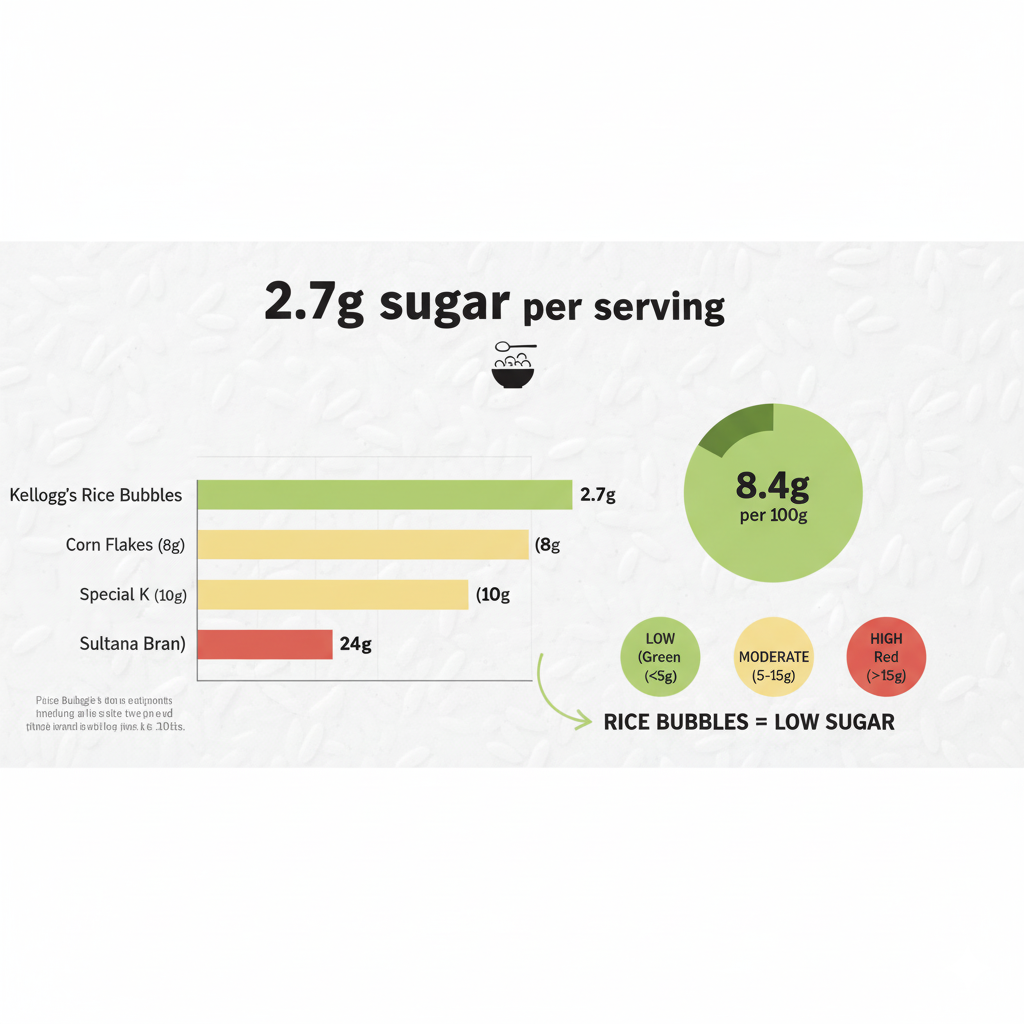
Let’s get straight to the numbers that matter. When you pour yourself a bowl of Kellogg’s Rice Bubbles, you’re consuming 2.7 grams of sugar per 30-gram serving (approximately one cup). To put this in perspective, that’s less than a teaspoon of sugar.[1]
But here’s where it gets interesting: nutritionists typically measure sugar content per 100 grams to compare products fairly. Rice Bubbles contain 8.4 grams of sugar per 100 grams, which places them firmly in the moderate category for breakfast cereals.[2]
What Does “Moderate” Actually Mean?
According to dietary guidelines, cereals with less than 15g of sugar per 100g are considered low to moderate. Rice Bubbles sits comfortably below this threshold, making them a relatively sensible choice compared to many sugar-laden alternatives on supermarket shelves.
Sugar Content Breakdown:
- Per serving (30g): 2.7g
- Per 100g: 8.4g
- Percentage of serving: 9%
- Daily intake impact: Minimal
I remember chatting with a nutritionist friend who explained that the real issue isn’t necessarily the sugar in Rice Bubbles—it’s what we add to them. That banana you slice on top? That’s another 14g of natural sugars. The honey drizzle? Add 17g per tablespoon. Suddenly, your “low-sugar” breakfast becomes something quite different.
The Complete Nutritional Profile of Rice Bubbles
Understanding how much sugar in Rice Bubbles is important, but it’s only part of the story. Let me share the complete nutritional picture so you can make informed decisions.
Macronutrients Per Serving (30g)
| Nutrient | Amount | % Daily Value |
|---|---|---|
| Calories | 115 | ~6% |
| Protein | 1.9g | Low |
| Total Fat | 0.1g | Minimal |
| Saturated Fat | 0.1g | Very Low |
| Carbohydrates | 26g | ~9% |
| Sugar | 2.7g | Low |
| Fiber | 0.3g | Minimal |
What’s Actually Inside the Box?
The ingredient list for Rice Bubbles is refreshingly short:
- Whole white rice (91%) – The star of the show
- Sugar – Second ingredient, but in small amounts
- Barley malt extract – For flavor
- Salt – Minimal amount
- Added vitamins and minerals – Iron and zinc oxide
What’s NOT in Rice Bubbles is equally important: no preservatives, no artificial colors, and no artificial flavors in the standard formula.[3] For those of us trying to avoid ultra-processed foods, this is refreshing news.
If you’re exploring other breakfast options, check out these high-protein vegan breakfast ideas that might complement your morning routine.
Comparing Rice Bubbles to Other Breakfast Cereals
When I started researching breakfast cereals for our mission at Vegan Reviews, I was shocked by the sugar content in popular options. Rice Bubbles actually shine when compared to their shelf neighbors.
Sugar Content Comparison (per 100g):
- Rice Bubbles: 8.4g ⭐
- Coco Pops: 35g
- Froot Loops: 38g
- Nutri-Grain: 26g
- Corn Flakes: 8g
- Weet-Bix: 3.3g
As you can see, while Rice Bubbles aren’t the absolute lowest in sugar, they’re significantly better than many chocolate or fruit-flavored cereals that children often gravitate toward.
Is Rice Bubbles Suitable for Special Dietary Needs?
This is where things get really interesting, and I’m excited to share what I’ve discovered about Rice Bubbles’ suitability for various dietary requirements.
🌱 Vegan and Vegetarian Suitability
Great news! Rice Bubbles are completely suitable for vegans and vegetarians. The cereal contains no animal products, no dairy, and no eggs. The vitamins and minerals added are synthetically produced, making this a plant-based breakfast option.[4]
For more vegan-friendly product reviews, explore our extensive collection at Vegan Reviews Australia.
🤰 Pregnancy-Safe?
Pregnant women can safely consume Rice Bubbles. The cereal provides:
- Iron supplementation – Important for preventing anemia during pregnancy
- Low fat content – Helpful for managing pregnancy-related digestive issues
- Quick energy – From easily digestible carbohydrates
However, the protein content is quite low at 1.9g per serving. Pregnant women need approximately 70-100g of protein daily, so you’ll want to pair your Rice Bubbles with protein-rich additions like nuts, seeds, or Greek yogurt (if not vegan).
🌾 Gluten Considerations
Here’s where I need to share some disappointing news for those with celiac disease or gluten sensitivity: Rice Bubbles are NOT gluten-free, despite rice being the primary ingredient.
The culprit? Barley malt extract – an ingredient that contains gluten. This has caught many people off guard, myself included when I first discovered it. If you require a gluten-free diet, you’ll need to look for certified gluten-free rice cereals instead.
For those seeking gluten-free alternatives, consider exploring options like Ancient Grains Organic Rice Sourdough Bread for other meal times.
🔄 FODMAP Friendly
Excellent news for those managing IBS or following a low-FODMAP diet: Rice Bubbles are certified FODMAP Friendly. This means they’ve been tested and verified to contain low levels of fermentable carbohydrates that can trigger digestive symptoms.[5]
This certification makes Rice Bubbles a safe breakfast choice during the elimination phase of a FODMAP diet, though you’ll need to be mindful of what milk alternative you use.
💪 Fitness and Weight Management
For those watching their weight or building muscle, Rice Bubbles present a mixed picture:
Pros:
- Low calorie (115 per serving)
- Virtually fat-free
- Quick energy source for pre-workout meals
Cons:
- Low protein content (only 1.9g)
- Minimal fiber (0.3g)
- High glycemic index may cause blood sugar spikes
I personally wouldn’t recommend Rice Bubbles as a post-workout meal due to the low protein content. However, they can work well as a light pre-exercise snack when you need quick-digesting carbohydrates.
The Hidden Sugar Trap: What You Add Matters
Here’s something that took me years to realize: the question of how much sugar in Rice Bubbles becomes almost irrelevant when we consider what most people add to their bowl.
Common Additions and Their Sugar Content:
- Sliced banana (medium): 14g sugar
- Honey (1 tablespoon): 17g sugar
- Raisins (small handful): 12g sugar
- Flavored yogurt (100g): 15-20g sugar
- Fruit juice instead of milk: 20-25g sugar per cup
A bowl that starts with 2.7g of sugar can quickly become a 30g+ sugar bomb! This is why understanding the base product is so important—it allows you to make informed choices about additions.
Smart Topping Alternatives:
- Fresh berries: Lower sugar, high antioxidants
- Nuts and seeds: Add protein and healthy fats
- Cinnamon: Natural sweetness without sugar
- Unsweetened plant milk: Keeps sugar content low
Making Rice Bubbles Work for Your Health Goals
After analyzing the nutritional profile and understanding how much sugar in Rice Bubbles, here’s my practical advice for incorporating them into a healthy diet:
✅ Rice Bubbles Work Well When:
- You need a quick, light breakfast before early morning exercise
- You’re managing digestive issues (FODMAP friendly)
- You’re looking for a low-fat cereal option
- You want to control sugar intake compared to other cereals
- You’re following a vegan diet and need convenient options
⚠️ Consider Alternatives If:
- You need high protein for muscle building or satiety
- You require gluten-free products due to celiac disease
- You’re managing diabetes and need low-GI options
- You need high fiber for digestive health
- You want maximum nutrient density per calorie
The Bigger Picture: Rice Bubbles in a Balanced Diet
I’ve learned through my journey with Vegan Reviews that no single food makes or breaks a healthy diet. Rice Bubbles can absolutely be part of a nutritious eating pattern when consumed mindfully.
The key is balance and awareness. Understanding that your bowl contains 2.7g of sugar per serving empowers you to make conscious choices about portion sizes and additions. It’s about knowing what you eat—which is exactly what we’re all about.
Building a Better Bowl:
The Foundation: 30g Rice Bubbles (2.7g sugar, 115 calories)
Add Protein:
- 2 tablespoons hemp seeds (6g protein)
- Small handful of almonds (6g protein)
Add Nutrients:
- Fresh blueberries (antioxidants, fiber)
- Sliced strawberries (vitamin C)
The Liquid:
- Unsweetened almond milk or oat milk
This upgraded bowl provides approximately 15g protein, 5g fiber, and keeps total sugar under 10g—a vastly improved nutritional profile while still enjoying your Rice Bubbles.
Real-World Considerations and Personal Experience
I’ll be honest: I grew up eating Rice Bubbles. They were a staple in my household, and the sound of them crackling in milk is pure nostalgia for me. But as I’ve become more conscious about nutrition, my relationship with them has evolved.
These days, I see Rice Bubbles as a tool rather than a complete meal. They’re perfect for those mornings when I need something quick and gentle on my stomach before yoga. I’ll have a small serving with unsweetened soy milk and fresh berries, and I feel satisfied without feeling heavy.
However, I’ve also learned they don’t keep me full for long. By mid-morning, I’m usually reaching for a snack. That’s why I often pair them with a protein smoothie on the side or save them for a light snack rather than my main breakfast.
Environmental and Ethical Considerations
While we’re focused on nutrition, it’s worth mentioning that rice cultivation has environmental impacts, including water usage and methane emissions from rice paddies. Kellogg’s has made some commitments to sustainable sourcing, but like many large food manufacturers, there’s always room for improvement.[6]
For those concerned about the ethics of their food choices, the vegan-friendly status of Rice Bubbles is a positive point. You’re not contributing to animal agriculture when you choose this cereal.
Practical Tips for Parents
As an auntie to three energetic kids, I’ve had many conversations with their parents about breakfast choices. Here’s what I’ve learned about Rice Bubbles and children:
The Good:
- Kids actually like them (no breakfast battles!)
- Relatively low sugar compared to alternatives
- Fortified with iron and zinc for growing bodies
- Quick preparation on busy school mornings
The Reality Check:
- Low protein won’t keep kids full until lunch
- Minimal fiber means less digestive benefit
- May cause energy crashes mid-morning
My Recommendation: Use Rice Bubbles as part of a breakfast, not the whole meal. Add a boiled egg (if not vegan), some fruit, and maybe a small handful of nuts. This creates a more balanced meal that will actually sustain your children through their morning.
The Science of Sugar and Breakfast Cereals
Let’s talk about why the question of how much sugar in Rice Bubbles matters so much. The Australian dietary guidelines recommend limiting added sugars to less than 10% of total energy intake—that’s about 50g per day for an average adult.[7]
A serving of Rice Bubbles contributes just 2.7g toward that limit, which is actually quite reasonable. However, most Australians consume far more sugar than recommended, with breakfast cereals being a significant contributor for many families.
The World Health Organization has even stricter recommendations, suggesting we aim for less than 5% of total energy from added sugars (about 25g daily) for additional health benefits.[8]
Cost-Effectiveness and Accessibility
One practical consideration: Rice Bubbles are widely available and relatively affordable. A 410g box typically costs between $4-6 AUD, providing approximately 13 servings. That works out to roughly $0.30-0.45 per serving—quite economical for a breakfast option.
This accessibility makes them a practical choice for families on a budget, students, and anyone looking for convenient breakfast solutions. When compared to more expensive “health food” cereals that may cost $8-12 per box, Rice Bubbles offer decent value.
Future Trends and Product Evolution
The breakfast cereal market is evolving rapidly. Consumers are demanding lower sugar, higher protein, and more whole grain options. While Kellogg’s has introduced variations like Rice Bubbles Multigrain, the original formula has remained largely unchanged for decades.
I’m curious to see if they’ll reformulate in coming years to reduce sugar further or increase protein content. Some competitors have already moved in this direction, and consumer pressure may eventually push Kellogg’s to follow suit.
Conclusion: Making Informed Choices About Rice Bubbles
So, how much sugar in Rice Bubbles? 2.7 grams per serving—a relatively modest amount that makes them a reasonable choice among breakfast cereals. But as we’ve explored, the complete picture involves so much more than just sugar content.
Rice Bubbles are vegan-friendly, FODMAP certified, low in fat, and free from artificial additives. However, they’re not gluten-free, they’re low in protein and fiber, and they won’t keep you full for long on their own.
Your Action Steps:
- Assess your needs: Consider your dietary requirements, health goals, and lifestyle
- Read labels: Always check the nutrition panel, not just the marketing claims
- Upgrade your bowl: Add protein, fiber, and nutrients through smart toppings
- Practice portion control: Stick to the recommended 30g serving size
- Balance your diet: Don’t rely on any single food for complete nutrition
Remember, knowing what you eat is the first step toward eating well. Rice Bubbles can absolutely be part of a healthy diet when consumed mindfully and as part of a varied, balanced eating pattern.
For more honest, comprehensive reviews of food products available in Australia, explore our full range of articles at Vegan Reviews. We’re here to help you make informed choices about every meal.
References
[1] Kellogg’s Australia. (2025). Rice Bubbles Nutritional Information Panel. Product packaging and official website.
[2] National Health and Medical Research Council. (2024). Australian Dietary Guidelines: Sugar Recommendations for Breakfast Cereals.
[3] Kellogg’s Australia. (2025). Rice Bubbles Ingredients List. Official product documentation.
[4] Vegan Australia. (2024). Certified Vegan Products Database. veganaustralia.org.au
[5] Monash University. (2024). FODMAP Friendly Certification Program. Official FODMAP database.
[6] Kellogg Company. (2024). Global Sustainability Report. Corporate responsibility documentation.
[7] Australian Government Department of Health. (2024). Australian Dietary Guidelines: Sugar Intake Recommendations.
[8] World Health Organization. (2023). Guideline: Sugars intake for adults and children. WHO Press.
SEO Meta Title and Description
Meta Title: How Much Sugar in Rice Bubbles? Complete 2025 Guide
Meta Description: Discover the sugar content in Kellogg’s Rice Bubbles (2.7g per serving) plus vegan, gluten, and pregnancy suitability. Complete nutritional analysis for Aussies.