
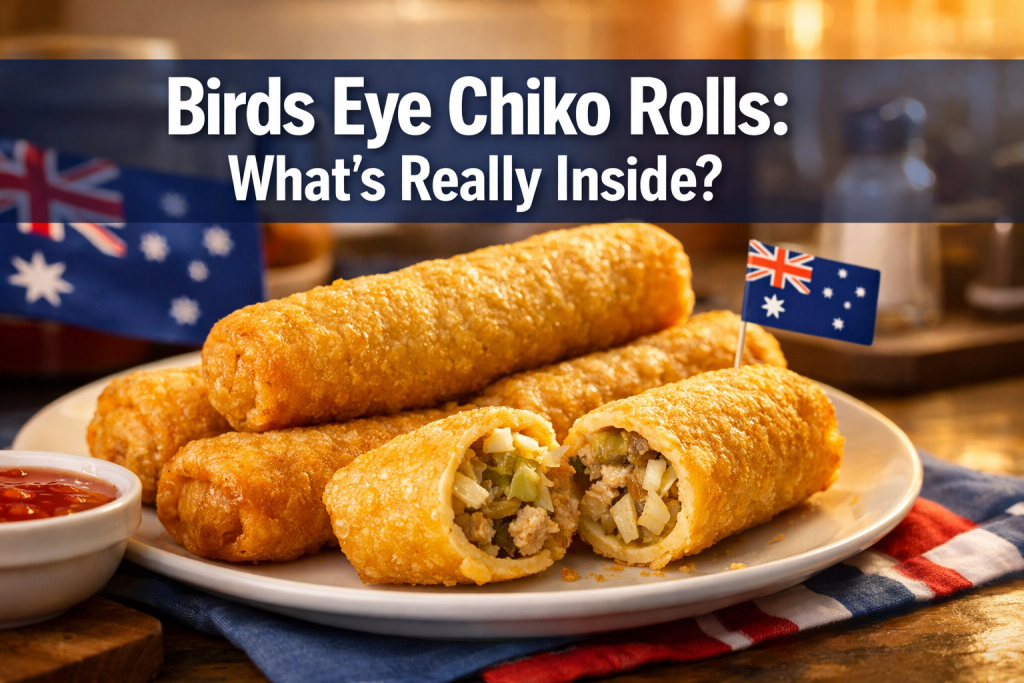
I’ll never forget the first time I bit into a Chiko Roll at a footy match when I was a kid. The golden, crispy exterior gave way to a steaming hot filling that was somehow both familiar and mysterious. Like many Australians, I grew up thinking of Birds Eye Chiko Rolls as an essential part of our food culture—right up there with meat pies and sausage rolls. But as I’ve gotten older and more conscious about what I’m putting into my body, I’ve started asking: what’s actually in these iconic snacks?
If you’re reading this, chances are you’ve had the same thought. Whether you’re a long-time fan of birds eye chiko rolls or you’re simply curious about this uniquely Australian product, you deserve to know exactly what you’re eating. That’s what we’re all about here at Zupra—helping Australians make informed choices about their food.
Key Takeaways
- Birds Eye Chiko Rolls contain a mixture of cabbage, barley, beef, wheat flour, and various seasonings wrapped in a thick pastry shell
- A single Chiko Roll contains approximately 311 calories, with significant amounts of fat (17.6g) and sodium (680mg) [1]
- The product was originally created in 1951 as an Australian alternative to the Chinese spring roll, designed to be eaten with one hand at sporting events
- While convenient and tasty, Chiko Rolls are best enjoyed occasionally rather than as a dietary staple due to their high calorie and sodium content
- Understanding the ingredients and nutritional profile helps you make informed decisions that align with your health goals
The History Behind Birds Eye Chiko Rolls
Before we dive into what’s inside a Chiko Roll, it’s worth understanding where this Aussie icon came from. The Chiko Roll was invented in 1951 by Frank McEncroe, a boilermaker from Bendigo, Victoria. Frank noticed that people at football matches struggled to eat Chinese spring rolls without making a mess—they’d fall apart too easily when eaten with one hand while holding a beer in the other! 🍺
His solution? Create a thicker, sturdier version with a more robust pastry that could withstand the rough and tumble of a footy crowd. The name “Chiko” was reportedly inspired by “chicken,” though the rolls have always contained beef rather than poultry.
Birds Eye, the well-known frozen food company, eventually acquired the rights to produce Chiko Rolls, making them widely available in supermarket freezers across Australia. Today, you can find them in virtually every corner store, service station, and supermarket from Perth to Brisbane.
What’s Actually Inside Birds Eye Chiko Rolls?
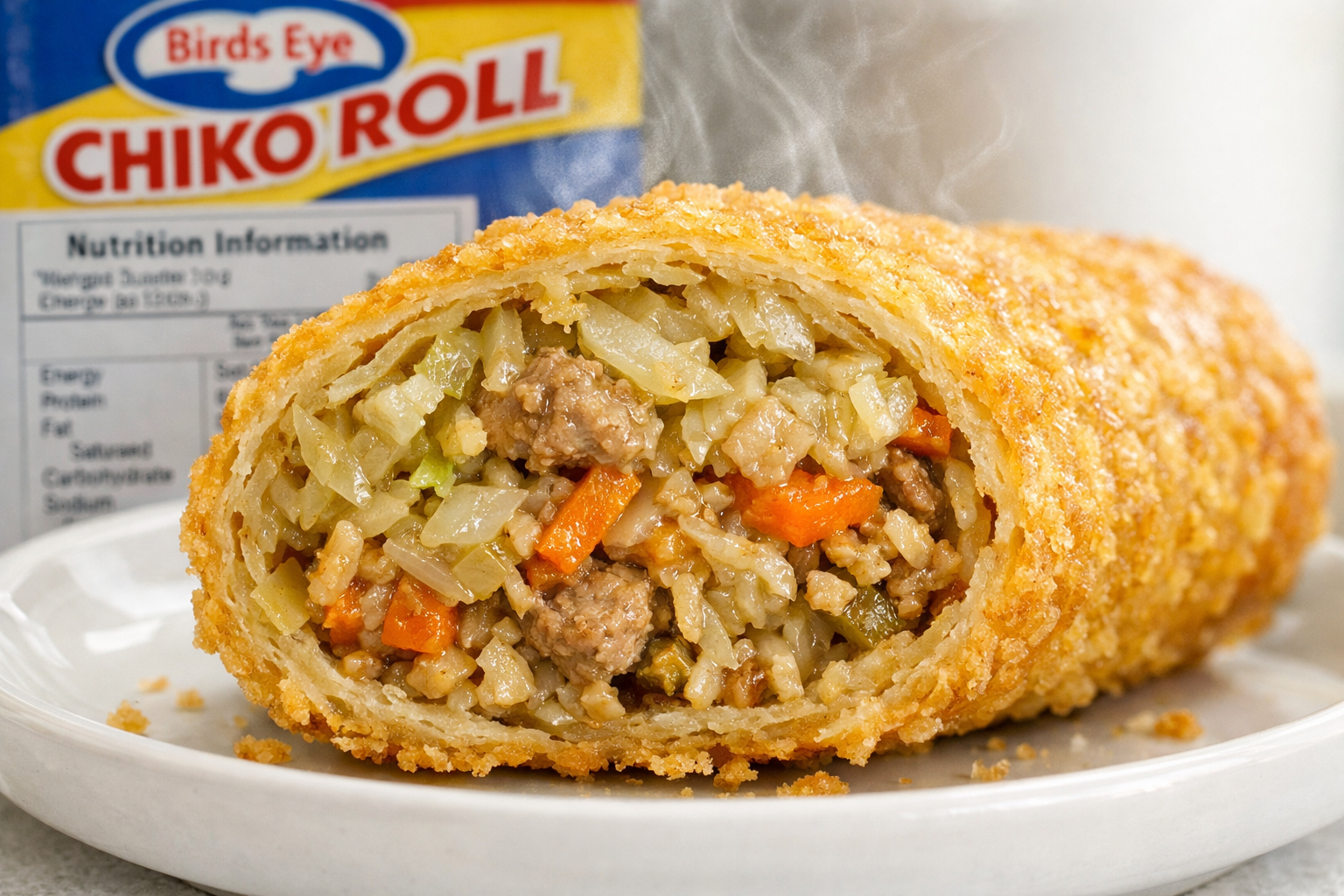
Now let’s get to the heart of the matter—what exactly are you eating when you bite into one of these golden cylinders? According to the official ingredient list, birds eye chiko rolls contain [2]:
Primary Ingredients
The Pastry Shell:
- Wheat flour
- Water
- Vegetable oil (typically palm oil)
- Salt
- Emulsifiers
The Filling:
- Cabbage (the main ingredient by volume)
- Barley
- Beef (approximately 9%)
- Carrot
- Celery
- Onion
- Textured vegetable protein
- Wheat cereal
- Various seasonings and flavour enhancers
Additives and Preservatives
Like many processed foods, Chiko Rolls also contain several additives:
- Flavour enhancers (621 – MSG, 635)
- Colours (including caramel)
- Hydrolysed vegetable protein
- Vegetable gums
It’s important to note that while these additives are approved for use in Australia, some people prefer to avoid them. If you’re interested in learning more about processed foods and their ingredients, check out our analysis of other popular Australian convenience foods.
Breaking Down the Nutritional Profile
Understanding the nutritional content of birds eye chiko rolls is crucial for making informed dietary choices. Here’s what you’re getting in a standard 175g Chiko Roll [1]:
| Nutrient | Amount per Roll | % Daily Intake* |
|---|---|---|
| Energy | 311 calories | 15.5% |
| Protein | 8.1g | 16.2% |
| Total Fat | 17.6g | 25.1% |
| – Saturated Fat | 8.9g | 37.1% |
| Carbohydrates | 29.3g | 9.5% |
| – Sugars | 3.0g | 3.3% |
| Sodium | 680mg | 29.6% |
| Fibre | 4.9g | 16.3% |
*Based on an average adult diet of 8,700kJ (2,000 calories)
What These Numbers Mean for You
Let’s put this into perspective. A single Chiko Roll provides:
✅ The Good:
- Decent amount of dietary fibre (4.9g)
- Moderate protein content (8.1g)
- Contains vegetables like cabbage and carrot
⚠️ The Concerns:
- High in saturated fat (37% of daily intake in one roll!)
- High sodium content (nearly 30% of your daily limit)
- Significant calorie density for a single snack item
- Contains processed ingredients and additives
If you’re comparing this to other Australian convenience foods, you might want to read about products like Chapmans Fritz Roll or Primo Sliced Roast Pork to see how they stack up nutritionally.
How Birds Eye Chiko Rolls Are Made
The manufacturing process for Chiko Rolls involves several industrial steps:
- Ingredient preparation: Vegetables are chopped and mixed with meat, barley, and seasonings
- Filling cooking: The mixture is pre-cooked to develop flavour and reduce moisture
- Pastry production: Flour, water, and oil are combined to create the distinctive thick pastry
- Assembly: The filling is encased in pastry using specialized rolling equipment
- Pre-frying: Rolls are partially fried to set the shape and create the golden colour
- Freezing: Products are snap-frozen to preserve quality
- Packaging: Rolls are packaged for distribution to retailers
This industrial process is quite different from traditional spring roll preparation, which is why the texture and flavour profile of Chiko Rolls is so unique. The thick pastry and pre-frying create that characteristic crispy-yet-chewy texture that fans love.
Cooking Methods: Getting the Best Results
If you’re going to enjoy birds eye chiko rolls, you might as well do it right! Here are the most common cooking methods and their pros and cons:
Deep Frying (Traditional Method)
- Temperature: 180°C
- Time: 8-10 minutes
- Result: Crispiest exterior, most authentic taste
- Downside: Adds significant extra fat and calories
Oven Baking
- Temperature: 200°C
- Time: 25-30 minutes, turning halfway
- Result: Good crispiness with less added fat
- Tip: Brush lightly with oil for better browning
Air Frying (Healthiest Option)
- Temperature: 200°C
- Time: 15-20 minutes, turning once
- Result: Crispy with minimal added fat
- Best choice for: Health-conscious consumers
Microwave (Not Recommended)
- Time: 2-3 minutes
- Result: Soft, soggy pastry that lacks the characteristic crunch
- Only use when: You’re desperate and have no other options!
For those interested in healthier alternatives to traditional convenience foods, you might enjoy reading about breakfast options like Protein UpGo that offer better nutritional profiles.
The Cultural Significance of Chiko Rolls in Australia
Beyond the ingredients and nutrition facts, Chiko Rolls hold a special place in Australian food culture. They represent a uniquely Aussie approach to multiculturalism—taking inspiration from Asian cuisine and adapting it to local tastes and needs.
For many Australians, Chiko Rolls are associated with:
- 🏉 Sporting events: Footy matches, cricket games, and race days
- 🎪 Agricultural shows: Royal Easter Show, Ekka, and country fairs
- 🚗 Road trips: Service station snacks on long drives
- 🌙 Late-night cravings: Post-pub food from corner stores
This cultural connection is part of what makes them so enduring, despite their nutritional shortcomings. They’re comfort food that connects many of us to childhood memories and shared Australian experiences.
Should You Be Eating Birds Eye Chiko Rolls?
This is the million-dollar question, isn’t it? As with most processed foods, the answer isn’t simply yes or no—it depends on your overall diet, health goals, and lifestyle.
When Chiko Rolls Might Fit Into Your Diet:
- Occasional treat: Once a month or at special events
- You’re otherwise eating well: If your regular diet is balanced and nutritious
- You practice portion control: Sharing one or eating it as a meal replacement rather than a snack
- You’re physically active: Athletes and active individuals can better accommodate the calories
When You Might Want to Skip Them:
- You’re watching sodium intake: Heart health concerns or high blood pressure
- You’re managing weight: The high calorie and fat content can derail weight loss efforts
- You have dietary restrictions: Contains gluten, may contain traces of other allergens
- You’re eating clean: If you’re avoiding processed foods and additives
Remember, knowing what you eat is about making informed choices, not about perfection. An occasional Chiko Roll won’t derail a healthy lifestyle, but they shouldn’t be a dietary staple.
Healthier Alternatives and Modifications
If you love the convenience and taste of Chiko Rolls but want a healthier option, consider these alternatives:
Make Your Own Version
Creating homemade “Chiko-style” rolls allows you to control ingredients:
- Use wholemeal pastry or filo dough
- Increase the vegetable content
- Choose lean, quality meat
- Reduce or eliminate MSG and additives
- Bake instead of fry
Commercial Alternatives
- Vietnamese spring rolls: Lower in fat, more vegetables
- Baked sausage rolls: Similar convenience, potentially better ingredients
- Vegetable samosas: Plant-based option with similar satisfaction
Pairing Strategies
If you do eat a Chiko Roll:
- Pair it with a large salad to increase nutrient density
- Drink plenty of water to help manage sodium intake
- Make it your main meal rather than a snack
- Balance it with lighter, vegetable-rich meals the rest of the day
For more information about making informed choices with Australian processed foods, explore our guides on products like Campbell’s Chunky Irish Stew and Praise Squeeze Whole Egg Mayo.
The Bottom Line on Birds Eye Chiko Rolls
After this deep dive into birds eye chiko rolls, what’s the verdict? These iconic Australian snacks are exactly what they appear to be: convenient, tasty, processed food that’s high in calories, saturated fat, and sodium. They’re not a health food, and they’re not trying to be.
The key is perspective. A Chiko Roll eaten occasionally as part of an otherwise balanced diet isn’t going to harm you. But relying on them regularly as a convenient meal solution could contribute to health issues over time, particularly related to excessive sodium and saturated fat intake.
What I appreciate most about understanding the ingredients and nutrition in products like Chiko Rolls is that it empowers us to make conscious choices. Maybe you decide they’re worth the occasional indulgence for the nostalgia and taste. Maybe you realize you’d rather spend those calories elsewhere. Either way, you’re making an informed decision—and that’s what matters.
Conclusion: Making Informed Choices About Convenience Foods
As we wrap up this comprehensive look at Birds Eye Chiko Rolls, I hope you feel more equipped to make decisions that align with your health goals and values. These golden cylinders of crispy, savoury goodness have earned their place in Australian food culture, but like any processed convenience food, they come with nutritional trade-offs.
The reality is that most of us will occasionally reach for convenient, processed foods—and that’s okay! Life is busy, and sometimes a quick snack from the freezer is what the situation calls for. The important thing is being aware of what you’re consuming and making sure these choices don’t become your dietary default.
Your Action Steps:
- Check the labels: Next time you’re shopping, compare different convenience foods using the nutrition panel
- Practice moderation: Enjoy Chiko Rolls occasionally rather than regularly
- Balance your diet: Make sure the majority of your meals are based on whole, minimally processed foods
- Explore alternatives: Try making your own versions or seeking out healthier convenience options
- Stay informed: Keep learning about the foods you eat by exploring more product analyses and guides
Remember, knowing what you eat isn’t about judgment or perfection—it’s about awareness and choice. Whether you decide to keep enjoying Chiko Rolls as an occasional treat or you choose to leave them in the past, you’re now making that decision from a place of knowledge.
What’s your relationship with Chiko Rolls? Are they a nostalgic favourite, or have you moved on to other snacks? Whatever your choice, make it an informed one! 🇦🇺
References
[1] Birds Eye Australia. (2025). Chiko Roll Nutritional Information Panel. Product packaging and company website.
[2] Birds Eye Australia. (2025). Chiko Roll Ingredients List. Product packaging and official ingredient declarations.